

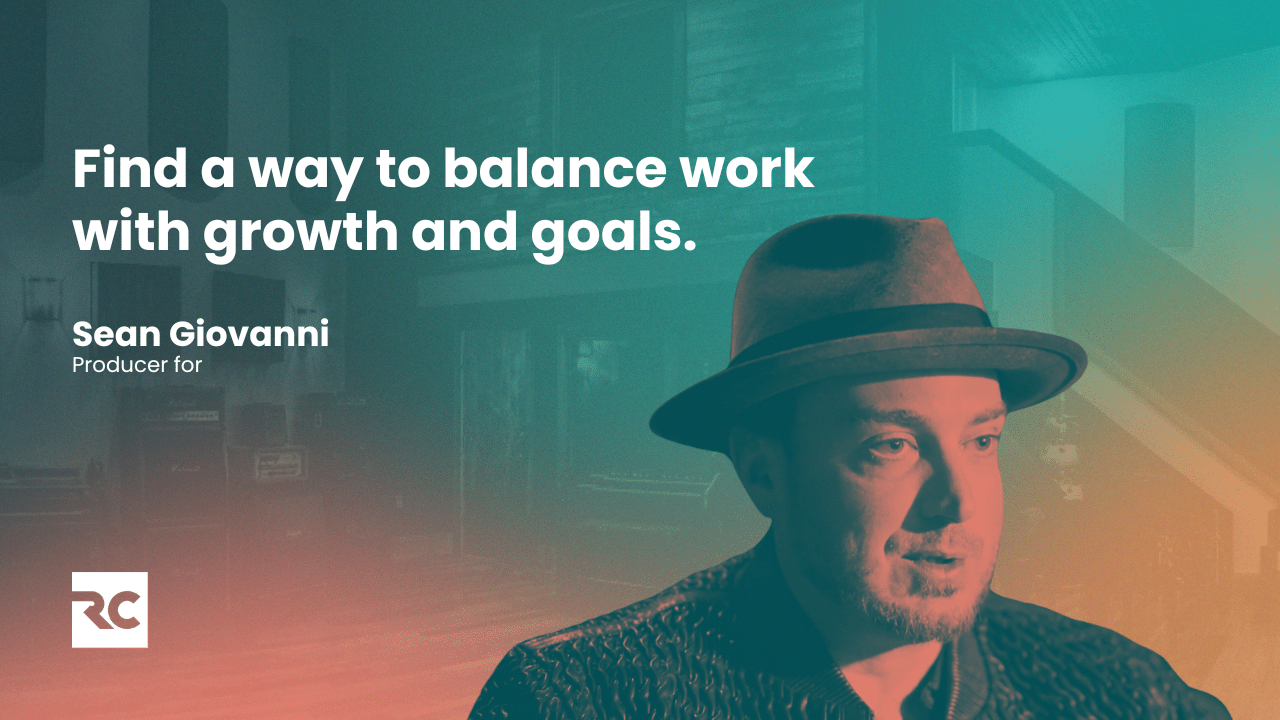
Sean Giovanni is a sonic storyteller and the owner of The Record Shop recording studio, in Nashville, Tennessee.
When did you first fall in love with music?
I was seven years old and my elementary school had an art contest. They had a variety of categories you could choose from, but the topic of the art had to be, ‘Don’t Do Drugs.’ I chose music. I had a little My First Sony Tape Recorder and an MC Hammer boombox. I figured out a way to play that and put it next to this microphone and rap into it at the same time. I ended up winning first place. The school had this assembly, and everyone in the school came and they called out the winners.
I had no idea that I had won. I’m sitting there and my name gets called, and I come down and pick up this award. At that time, I was a little bit taller than everybody and I had big red curly hair. I wasn’t necessarily like the cool kid or popular. But after that assembly, I remember walking down the hallway and the kids that I had been trying to get along with were walking right next to me lockstep. I saw that music could impact people. It could show people a different side of you. I can visualize walking down that hallway, it was that impactful to me. From that moment on, music was one of the most important things in my life.
When did you start pursuing it with more dedication?
I was in eighth grade and MTV, back then, had MTV Spring Break. It was a show where they would go down to Cancun and there’d be these DJs playing on these big stages with everybody partying, going crazy. I saw this guy named DJ Skribble, he was scratching records and DJing for this big party, like an outdoor club party on the beach. I just thought, ‘Man, that looks awesome.’ That summer, I saved up some money cutting lawns around the neighborhood and I bought a couple turntables, a mixer, a handful of records, and a book that was a course from Berklee College of Music called The Art of Turntablism.
I studied that, that whole spring break, and then through the summer. I saved up a little bit more money. I bought a four track cassette recorder and started recording. It was game over, that’s what I was gonna do. I had friends that had started bands and some friends that were writing songs, and really great singers or rappers. I would make some tracks or I would bring in my friend that plays guitar and sings and I set up this little makeshift studio in my parents basement. I would spend all my time, if I wasn’t in school or playing sports, in that basement recording.
How did your parents react to your drive towards a career in music?
When I was getting ready to graduate high school, my parents were pretty strongly adamant about me going to college. Like most parents, they saw the traditional path of a career and they expected their children to go to college, get a degree, find their industry, and work their way up. Music and art in general is often looked at in our society as a hobby. If you don’t come from a family that has a musical career background or an industry background, it’s pretty challenging for them to recognize that this is a business, it’s not just a hobby. It’s a career. And it’s a legitimate career. That was something that it took a little bit of time for my parents to recognize. It was very foreign to my parents initially; this idea that their kid wanted to go into music. It didn’t seem like a real job.
Over time, fortunately, my parents started to understand the passion that I had for it. I went and did the research, and I figured out how to show this is a career, like, ‘Here are the different jobs that you could have.’ I became really enthralled by the idea of having a career working in a studio, being on the other side of the glass, and helping artists bring their songs to life. I found that there were jobs as a recording engineer, a mixing engineer, and there were producers that put the whole thing together. I read all kinds of books and did a bunch of research.
I said, ‘Hey, look, this is a real job. This is a career, there’s an industry here and a business around it. These are the occupations that you can have. I found a few schools that can teach you how to do this. Now, I’m not going to have a college degree. But, I am going to go through a program that’s going to teach me a trade. There’s a possibility that I can turn that into a career.’ And that was enough to get my parents on that side and to understand. My parents wanted me to be happy.

Tell us about the program you entered.
I ended up finding an audio production trade school that I thought [would be] really great to go to. They had a number of different studios, they toured me through, and gave me the idea that if I got their certificate, that I was going to be able to go to a studio and interview and get a job as an assistant and climb the ladder and work my way up. I was super excited. The good thing about the school, like most schools that I’ve experienced, is that they did teach the technical aspects of things. I had access to equipment and I learned the basics of how to operate the equipment. The challenging thing was not getting a lot of hands-on experience in the process. Fortunately, the school that I went to had access to the studios outside of class. If I didn’t have that access to hands-on experience outside of a classroom setting, there’s no way that I would have been prepared to be able to get into an industry like Nashville, and be able to compete in any way whatsoever.
Yeah, Nashville is notoriously competitive. What obstacles were you up against when you started out?
One of the challenges that I had when I moved here is that I was really excited and really advantageous. I was always pushing how I was willing to do anything [and begging for] a shot. It showed a little bit of desperation, but also it didn’t show anything unique. I thought that I was special because I found this passion really young, I worked really hard, I excelled, I went through this program at the top of my class, and I did all the things that I was taught growing up in a blue collar town: ‘Work hard and prove yourself.’ But when I entered the industry, I found out that there were countless other people that were doing exactly the same thing. And that they were equally qualified, if not more qualified, and equally talented, if not more talented. [I had to find] what was unique about me. [I had to find] the things that I could provide at a higher level than what the average could. Once I recognized that, that was when opportunities started to happen.

What did those opportunities look like?
My first big opportunity in the industry came from following the concept of saying, ‘Yes.’ I have a friend named Peter Keyes, who’s an incredible keyboard player, producer, and songwriter. We had just met recently, we had been working together for a little while. He had this songwriter that he was collaborating with named Sinister. Sinister had been in a bunch of heavy metal bands back in the day, had just moved to Nashville, got a publishing deal with an artist, and was doing some really cool stuff. Peter hit me up because he thought the vibes would connect well, and said, ‘Hey, would you be interested in doing some demos for this artist.’
There wasn’t any budget for it. At that time, I was pretty busy in the studio. I had sessions every day, things were going pretty well. I had moved into a larger studio that I was leasing out and working out of and I didn’t necessarily need to work for free to gain an opportunity. But because I trusted Peter, I didn’t think twice about it. I said, ‘Yeah, let’s do it! It doesn’t matter if I’m getting paid up front for the hours that I’m spending time working on these demos. I see that there’s an opportunity to collaborate with people that I think are cool, for music that I like. I’m going to enjoy it.’ We ended up doing a couple of tracks and we were working together for a while. Those songs were great.
Eventually, the manager of Sinister, Charlie Panache, heard some of the demos that we were doing. One of his partners, a songwriter named John Rich, was opening up a private studio to work on his own projects and some of the stuff that he was producing. They needed somebody to engineer. So, Charlie asked me one day if I could come over to the studio and engineer a session for John. It was for a record called Reggae has Gone Country, where they brought in a bunch of superstar reggae artists to do cover songs of classic country music. I walked in, a little nervous, but very excited to finally have this big opportunity. Fortunately, the session went really well. John, and I hit it off. Then after the session, Charlie asked me to be the staff engineer at the studio.
Did your parents fully change their tune after your career began to grow?
A couple years after I moved to Nashville, I came home to visit my family in Detroit for Christmas. My whole family pitched in, and they bought me a sign that sits in my studio to this day. It had the name of ‘The Record Shop’ on it. On the back of it, there was a letter that said, ‘We are proud of you.’ I broke down crying, because I hadn’t had anyone tell me that. I was going down this path on my own, trying to figure it out and I didn’t even realize how lonely I was until someone said, ‘We are proud of you.’ I felt like, ‘I’ve done something,’ even though I didn’t feel like I had accomplished anything, because I was nowhere near the goals that I was looking to accomplish. But the people around me were proud of the progress that I was making. That gave me hope to continue down this path.
What advice do you have for people just starting out in the music industry?
When you get to the top of a mountain you just hit the bottom of another one. You have to enjoy the journey instead of the destination. [You see these] memes on social media, and they’re cliche, but there’s so much truth in the idea that you’re only successful in the moment of success. As soon as that moment passes, you’re just going after the next moment. I think the only way to stay sane, which is an incredibly challenging feat to accomplish in this industry, is to focus on the fulfillment of the process of doing what you love every day.
What do you think makes you stand out, particularly, as a mentor?
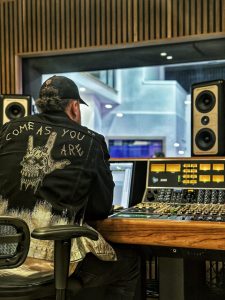
My door’s always open to chat. When I got started in the industry, it was really challenging for me to find someone that was willing to just sit down and give some advice and show me some direction. I wish that I would have had a specific mentor that could have really guided me through the process. I feel grateful for the success that I’ve been able to have and hopeful for the future of my career. But I [mentor] because I want to be able to give support to those people that may not know where to find it. If there’s a question that you have, or there’s a challenge that you have, or something that you’re trying to accomplish in your career, and you’re not sure where to turn, [I’m here]. If I can, in any way, give you some kind of two cents or idea about how to make it happen [I’m here]. Feel free to just give me a shout, I’d be more than happy to do whatever I can to help you.