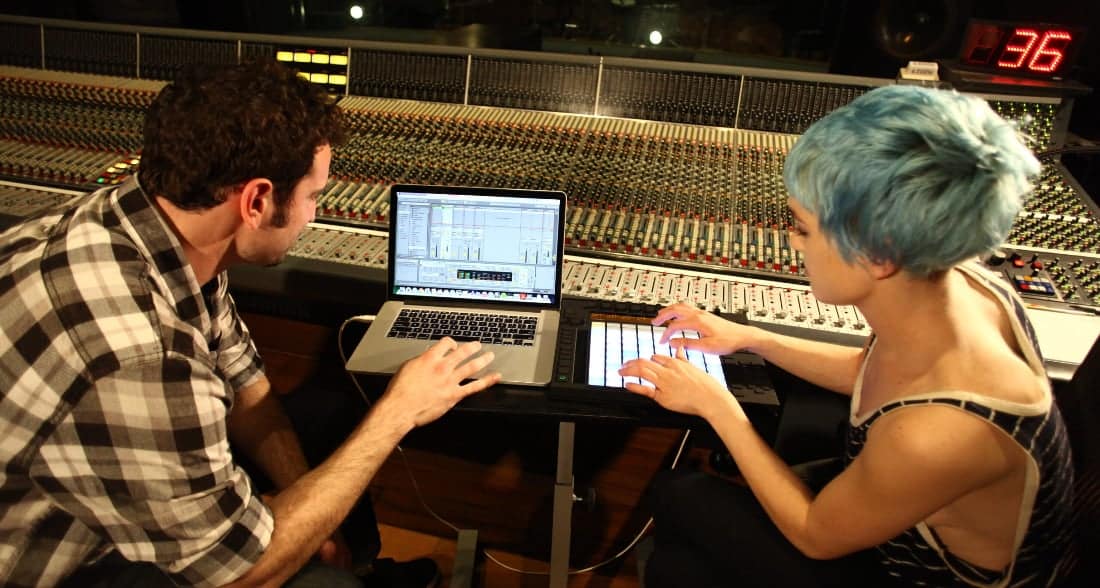
What is a live sound engineer

A live sound engineer is responsible for managing the quality of sound at live events, concerts, performances, and other live productions. Their primary role is to capture, mix, and reinforce audio to create the best possible sound experience for the audience and performers.

Live sound engineers play a crucial role in creating a memorable and enjoyable experience for both the performers and the audience. Their skills are essential for achieving clear and high-quality sound in various live settings, from small clubs to large concert venues and outdoor festivals.

As a live sound engineer, you set up and configure audio equipment, including microphones, amplifiers, mixing consoles, speakers, and monitors. You work with equipment to amplify, adjust, and distribute sound from live performers (musicians, vocalists, speakers) to the audience in a clear, balanced, and appropriate level for the venue and event.

In some cases, you may be responsible for recording live performances for later distribution or archiving purposes, so you’ll need to consider the acoustics of the venue and make adjustments to ensure that sound quality is optimized. The audience shows up for the artists, so you’ll do whatever it takes to make them sound their best.


What does a live sound engineer do

On a day to day basis, a live sound engineer needs to set up for a show and work to make the artists they work for sound as good as possible. This takes a lot of planning, sometimes days in advance, to ensure the show goes off without a hitch.

The first thing you’ll need to do is inspect the venue and make a plan for the show. Go to the venue well in advance to assess the space, acoustics, and layout, especially if it’s an outdoor event. Review the event’s technical rider, which includes the band’s or artist’s equipment requirements.

On the day of the show, you’ll work with the crew to load any equipment you’ll need for the show (after inspecting any equipment the venue may already have). You’ll set up microphones, instrument amplifiers, and monitor speakers according to the stage plot and input list. If needed, set up the sound mixing console in the optimum position so you can hear the show as it happens and connect all cables.

Conduct a sound check with the performers to balance instrument and vocal levels, check microphone placements, and configure monitors. Adjust equalization settings and effects as needed to achieve the desired sound and prevent feedback issues during the show. Once the setup is complete and everything is in order, the live sound engineer is ready to operate the mixing console and manage the audio throughout the live performance.

How do you become a live sound engineer

Becoming a live sound engineer requires a combination of education, hands-on experience, technical skills, and a deep understanding of audio equipment and production. While this can be a somewhat technical job, live sound engineers still need to have an ear for music as well as the ability to communicate clearly.

While not mandatory, enrolling in a formal audio engineering program or attending a technical school can provide a solid foundation in audio theory, sound reinforcement, recording, and live production. But you also need to get practical experience to put what you’ve learned to the test. Recording Connection has the answer.

By immersing yourself in the world of Audio Engineering within a professional studio, you’ll gain a profound insight into the art of session preparation and client interaction, among other vital aspects of the craft. Our empowering audio engineering program spans just six to nine months, offering an affordable alternative to traditional colleges, universities, and trade schools.

Becoming a live sound engineer is a journey that combines education, practical experience, and dedication. It’s a field where hands-on learning and real-world experience are often just as important as formal education. As you gain more experience and establish your reputation, you can advance in your career and take on more challenging and rewarding projects.

Additional Information

Q. Do you need a degree to be a live sound engineer

The music industry is such that anyone with enough talent, skill, and determination can have a career–it’s more about what you know than how you know it. So, no, you don’t need a degree from a four-year university, community college, or trade school. However, formal education in audio engineering or related fields can provide a strong foundation and enhance your knowledge and skills.

But it’s practical experience and on-the-job training that are highly valued in the live sound engineering field. Working as an intern or apprentice at live music venues, studios, or with experienced engineers can provide valuable real-world experience. Many live sound engineers start their careers in entry-level positions, such as stagehands or assistant engineers.

You can also learn the fundamentals of live sound engineering through self-study, online resources, books, and tutorials. But it can be difficult to know which resources to follow and you can’t really ask a YouTube video a question. And with message boards, there can be so many different opinions it can be really confusing.

Recording Connection brings both the educational and experience aspects of learning about live sound engineering together in a fully immersive experience. You’ll work with your mentor inside their studio, getting immediate feedback and answers to your questions. Prove your abilities, and you can help your mentor during a live session with professional artists. You get the best of both worlds.

Q. What skills do you need to be a live sound engineer

As a live sound engineer, you need a diverse set of technical, interpersonal, and problem-solving skills. From learning the gear to training your ear, a live engineer is part physicist, part artist, and part fixer all at once–and done without a safety net of having another take.

As far as the technical aspects of the job, you need a familiarity with various types of audio equipment, including microphones, mixing consoles, amplifiers, speakers, signal processors, and cables and how to set up and maintain them. This includes knowledge of digital audio concepts, including audio interfaces, digital mixers, and recording software.

Because you won’t always have control over the venue, you need knowledge of acoustic principles, room dynamics, and sound propagation to optimize audio quality. This includes creating monitor mixes for performers on stage so they can hear themselves clearly.

Because the show is live, you’ll need to anticipate any issues before a show and act fast when something unexpected happens. This is where collaborating with stage crews and your knowledge of the gear, cables, and power sources will really come in handy. Continuous learning and hands-on experience are essential for mastering these skills and excelling in the field.

Q. How to learn live sound engineering

Like most music engineering and production jobs, it takes a combination of education, determination, and hands-on experience to learn live sound engineering. You can start by gaining a strong foundation in sound principles and getting a baseline knowledge of the equipment.

This can be done in a few different ways. While you don’t need a degree from a four-year university to become a professional live sound engineer, some formal education will make sure you learn the basics, such as audio physics, music theory, and signal flow while you familiarize yourself with the gear you’ll be working with.

From there, it’s a matter of getting as much experience as you can. This is a career where you learn by doing, and practical exposure to the job allows you to grasp real-world challenges and solutions while becoming comfortable with audio equipment. Work at local events, music venues, or with bands to set up and operate sound systems.

Master the technical aspects of audio equipment, including microphones, mixers, amplifiers, and speakers. Practice setting up, troubleshooting, and fine-tuning sound systems. Developing proficiency in these areas builds your confidence and ability to handle technical challenges efficiently. You’ll also want to stay up-to-date with industry trends and technological advancements by reading industry publications, attending workshops, and continuing to learn and adapt.

Q. How long does it take to become a live sound engineer

Becoming a live sound engineer is a multi-step process, and the length of time it takes to become proficient enough to become a professional largely depends on you. If this is something you’ll just work on during the weekends for a few hours, it will take a lot longer than if you dedicate yourself to getting the skills and experience on a daily basis.

That being said, formal education can last up to four years at university while trade schools can last one to two years. While you won’t necessarily get any “real-world” experience, you should be able to give yourself a solid foundation on the technical aspects of the job and pick up a baseline knowledge of the gear you’ll use.

Then the real work begins: getting the practical experience you need and building a portfolio to show potential clients. This can only be done by working in live environments with actual artists. During this time, you’ll still be working to further your skills while learning the complexities of different situations. It can take a year or two beyond learning the basics before you start to make this career.

With Recording Connection, you can condense the time it takes to learn the rudimentary skills of live sound engineering while gaining practical experience at the same time. Our Live Sound Program is taught by an experienced mentor, covering 11 courses spread out over six months. You’ll see first-hand what the job entails and get on-the-job training. It’s an accelerated program designed to get you into the job force as soon as possible. But it largely depends on the work you’re willing to put into it.

Q. Live sound engineer vs Mastering engineer

Live sound engineers are responsible for managing sound quality during live performances, focusing on real-time adjustments and technical problem-solving. Mastering engineers, on the other hand, work in post-production to enhance the quality of recorded tracks, ensuring they sound their best for distribution.

While both roles involve audio engineering, they cater to different stages of the music production process. Live sound engineers work in real-time during events, such as concerts, festivals, theater productions, and corporate presentations. They are on location and may not have access to all of the tools available to them in a normal recording studio.

Mastering engineers work in controlled studio environments, refining the final mixdown of recorded tracks, applying equalization, compression, and other processing to fine-tune the sound. Where a live engineer makes the artist sound great on stage, the mastering engineer readies the music to be distributed through various media channels (radio, streaming, and others).

Both work closely with their clients to understand how they want to sound and the vibe they’re trying to create. The live sound engineer works to make that happen during a live show while the mastering engineer has the ability to work at their own pace, spending more time when necessary to get the tracks to sound just right for a variety of uses.

Q. Live sound engineer equipment

Live sound engineers use a variety of equipment to ensure that audio is captured, processed, and distributed effectively during live events. You may need to bring your own equipment or work with the systems already in place at the venue. This can present a whole host of challenges, so you need to make sure you have what you need to make the show sound great.

Generally speaking, there is gear you’ll need at your disposal at every gig (whether it’s yours or it’s provided to you). It’s important that you can work with a wide variety of gear and inspect every venue beforehand to make sure you have what you need. This includes a working knowledge of different types of microphones, mixing consoles, and signal processors.

Communication devices are needed so you can talk with stage crews and others during a show, as well as in-ear devices so the band can hear how they sound while playing–this reduces stage noise and improves overall sound quality. You will also be responsible for recording equipment.

There are accessories you may be required to have as well, including cables, mic stands, power distribution systems, and even speakers depending on the venue. Venues may have their own sound systems, which you’ll want to inspect well before the show. Cases and racks for all of the gear are needed to help keep everything safe and secure until set up.

Q. How much do live sound engineers make

Just like any other industry, the more skill you have, the more experience you have, and the better track record you have will go a long way in deciding how much money you’ll make. There will be outliers of course–there are superstars in any industry–but this is a look at what live sound engineers can make at different stages of experience and notoriety.

Keep in mind that your salary as a live sound engineer can depend on things out of your control, too. For example, where you live can play a big role in what you make: you’ll get paid more in NY or LA, but everything is more expensive there, too. Demand for live music engineering will fluctuate as well as smaller towns may not have as many venues.

Entry-level live sound engineers with limited experience may earn an annual salary in the range of $25,000 to $40,000 working part-time or on smaller events with lesser-known artists. Those with a few years of experience and a solid skill set can typically earn between $40,000 and $70,000 per year. They may work on a variety of events, including concerts, corporate meetings, and theater productions.

Experienced live sound engineers who have a strong track record, advanced technical skills, and the ability to handle large-scale events can earn salaries ranging from $70,000 to $100,000 or more annually. At the top tier of the profession, highly experienced and renowned live sound engineers who work with top artists and on international tours can command salaries exceeding $100,000 per year. Some may even earn a percentage of the event’s gross revenue in addition to a base salary.

Build your music production and audio engineering skills by learning with an industry professional near you.

INTERVIEWS WITH THE PROS

We have dozens of interviews from the pros that work with you at Recording Connection. Your music production journey starts here.

ALL JOB OPPORTUNITIES

Explore diverse music engineering careers, from live sound to studio production, offering vast creativity and technical growth.

Sound Effects Editor

A sound effects editor is responsible for creating and incorporating sound effects to enhance the auditory experience of a project.

Media Tech

In the recording industry, a media technician, also known as a sound technician, is responsible for the technical aspects of audio and visual production.

Sound Board Operator

In the recording industry, a board operator serves as the linchpin for audio production, managing the sound mixing console, commonly referred to as the “board.”

A&R Coordinator

This role involves scouting for new artists, evaluating demos, and collaborating with artists throughout their career trajectory.

Pro Tools Engineer

A Pro Tools engineer is adept at using Pro Tools, a premier digital audio workstation (DAW) software used extensively in audio production across various industries.

Audio Post Production

Audio post production involves blending individual audio tracks—dialogue, music, effects—into a balanced and harmonious mix.

DJ

DJs play a crucial role in the music industry as tastemakers, entertainers, and influencers.

Music Producer

A music producer is someone who oversees and creates the musical production of a song or album from start to finish.

Recording Engineer

This highly skilled professional is responsible for all the technical aspects of recording, from capturing the initial sounds to editing and mixing the final product.

Mixing Engineer

A mixing engineer is responsible for taking individual audio tracks and blending them together to create a cohesive and balanced final mix.

Sound Engineers

A sound engineer is responsible for the technical aspects of sound recording, mixing, and reproduction.

Music Recording Professional

Music recording professionals perform a wide range of tasks related to the recording, editing, mixing, and mastering of music or audio content.

Music Engineer

The primary responsibility of a music engineer is to capture, shape, and enhance the sound quality of music recordings.

AV Technician

An audio/visual technician has various responsibilities related to the technical aspects of live performances, concerts, and events.

Sound Designer

Sound designers use mixing techniques and spatialization to position and move sounds within the stereo or surround sound field.

Audio Engineer

At its core, an audio engineer’s job entails capturing sound waves through microphones and setting up equipment to record them.

OVER 4000 REVIEWS

Yes, we have over 4000 positive reviews.

Our students value the impact our programs have on their future. You learn from the best.

Recording Connection does a GREAT job at placing you into REAL studios with REAL engineers and opens the door to allow you to create those connections with your mentor, and continual learning. You truly get out of the program what you put in. Another great aspect of the program are the virtual advisors that can help you with question regarding Pro Tools and other material as well. Much props to Alex Solis for helping me through the program!

Octavio Preciado

After being a musician for a couple of years, I've decided to take my music skills to the next level. I was very fortunate to have landed in Recording Connection, they helped me out since day one with my registration, and any paperwork needed. I was placed at ES Audio Studios in Glendale, CA. My mentor at the studio, Donny B. is very knowledgeable. He helped me through the process since the beginning. He helped me pick a great laptop suitable for Engineers. I had no clue of the existence of any DAW's, and after a few months of spending time at the studio, asking questions, getting a hands on experience, and doing colabs with other students/engineers I now have the privilege to be a professional. A huge thank you, to all who helped answer my questions and helped me grow as a professional engineer.

Jorge Fuentes Quiroz – Los Angeles, California

I had a very good experience with Recording Connection and my mentor Donny Baker from ES Audio Recording Studios. He taught me the things that I need to know about being an engineer/producer and to always be prepared for the gig and to keep the gig as well. I learned a lot from my mentor, other students that are more experienced, my Academic Facilitator Jon, and other engineers that worked there. I thank everybody that has helped me through this journey and will use the advice that has been given to me to improve as an engineer.

Noah Gonzalez – Los Angeles, California

AMPLIFY YOUR LIFE WITH AUDIO ENGINEERING AND MUSIC PRODUCTION IN-PERSON MENTORSHIP

Are you our next Success Story?

"*" indicates required fields

This field is for validation purposes and should be left unchanged.